
Healthcare + Medical Exhibits
Your regulatory team shouldn’t be the last people to see the booth design. They should be the first.
NPARALLEL + Atomic Props designs and builds healthcare trade show exhibits where FDA promotional guidelines, HCP engagement rules, and clinical demo requirements shape the project from day one.
INDUSTRY CONTEXT
Most exhibit partners start with a floor plan. Healthcare exhibitors start with a regulatory review.
Every piece of printed material in your booth, every screen graphic, every product claim is subject to FDA promotional guidelines. At medical society conferences like RSNA and HIMSS, HCP engagement restrictions shape everything from booth staffing to demo protocols. Treat compliance as a late-stage review and you’ll spend more time in legal revisions than in design.
We build compliance into the design phase, not the review phase.
The physical environment gets complicated fast. Medical device demonstrations often require no-touch configurations for sterile products, isolated electrical circuits for sensitive equipment, and booth layouts that separate live-demo zones from general traffic. If you’re showcasing imaging technology, you may need dedicated darkroom conditions within your exhibit space. If you’re running clinical workflow simulations, the booth needs to accommodate multi-station sequences that mirror actual care settings.
Material choices that meet no-touch demo requirements. Sightlines that support required fair-balance disclosure. Layouts that separate promotional and non-promotional content zones the way your regulatory team actually needs them. The result is an exhibit your medical affairs team signs off on the first time, not the fourth.

SHOWS WE KNOW
Healthcare, medtech, pharma, life sciences: each vertical has its own calendar of can’t-miss shows. Here are a few of the shows where our clients show up, and where we’ve learned what works on each floor.
Imaging equipment demos demand darkroom-grade display conditions and isolated power. Technical education sessions compete directly with exhibit floor time, so your booth has to earn the visit.
Health IT’s flagship event puts interoperability and digital health center stage. Exhibits here lean toward interactive software demos and meeting-room-heavy layouts.
This event connects leaders in outpatient surgery with vendors focused on efficiency, patient safety, and cost-effective care. Exhibits emphasize practical solutions that improve ASC operations and clinical workflows.
One of the largest conferences dedicated to pain management, PAINWeek attracts multidisciplinary clinicians seeking the latest therapies and technologies. Exhibits highlight medical devices, pharmaceuticals, and interventional pain solutions.
The premier GI meeting brings together gastroenterologists, surgeons, and endoscopy specialists. Exhibits focus on endoscopic technology, minimally invasive procedures, and hands-on device demonstrations.
Medical device manufacturing and design. Exhibitors are selling components and capabilities to other manufacturers, not end users. Technical depth wins.
OUR WORK
Three things separate high-performing healthcare exhibits from the rest: seamless regulatory approval, environments built for compliant product demonstrations, and meaningful conversations that turn into lasting customer relationships.
Here’s how we’ve helped make that happen.
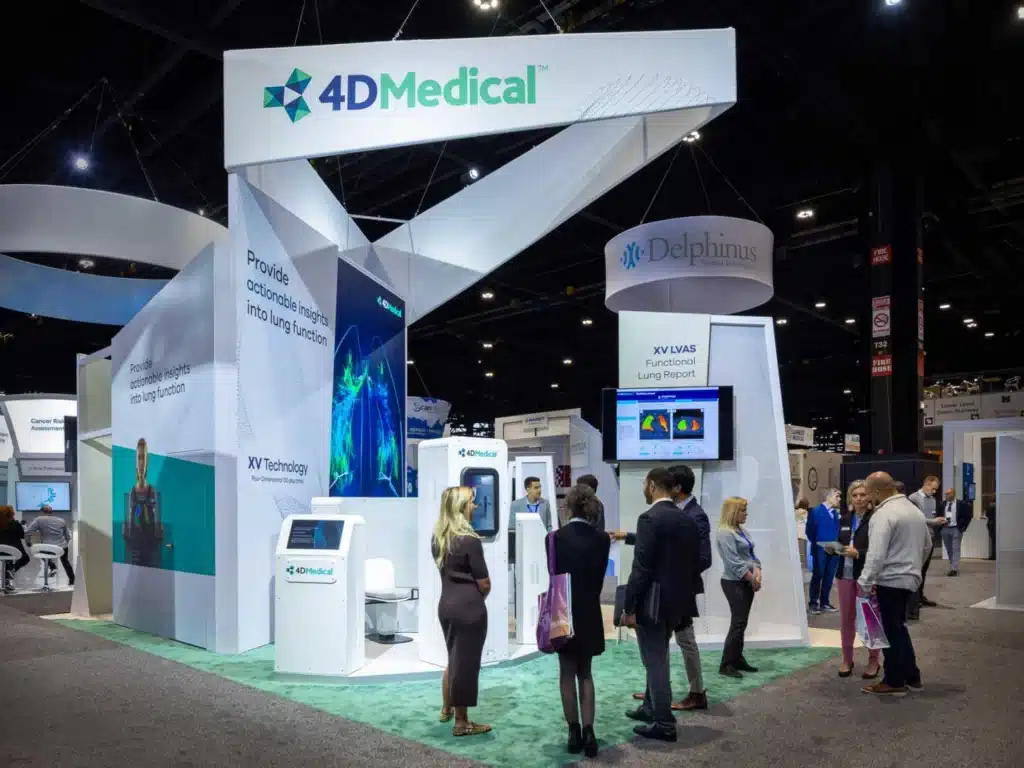
Real-time lung imaging demo environment for 2,000+ radiologist interactions across a 20×30 island.
Capabilities
Exhibits engineered for compliance-driven layouts, no-touch demo zones, and the technical infrastructure healthcare products require.
When your exhibit needs to demonstrate a device without a working prototype on the floor, custom fabrication built to clinical specification fills the gap.
Interactive software demos, AR/VR clinical simulations, and data visualization environments that give HCPs hands-on understanding of your product.
FAQS
Healthcare exhibit design starts with regulatory review, not creative concepting. FDA promotional material guidelines, fair-balance disclosure requirements, and HCP engagement rules all shape the booth’s layout, content placement, and staffing plan before the first rendering is drawn. Starting design without legal and regulatory input leads to costly late-stage revisions.
FDA guidelines govern what claims can appear in your exhibit, where promotional and non-promotional content must be separated, and how product demonstrations are presented. Your exhibit partner needs to understand these constraints at the structural level, not just the graphic design level, so the booth’s physical layout supports compliant messaging zones from day one.
At RSNA, compliant pharma exhibits typically include clearly separated promotional and medical education zones, fair-balance signage visible from required sightlines, and demo stations configured for no-touch or limited-contact product interaction. The best designs make these requirements feel intentional rather than bolted on.
Most healthcare exhibit programs need 6 to 8 months of lead time. The additional runway compared to other verticals accounts for regulatory review cycles, legal approval of promotional materials, and coordination between marketing, medical affairs, and your exhibit partner. Starting the conversation earlier gives you more design options and fewer rush fees.
Most healthcare exhibit programs need 6 to 8 months of runway. The earlier the conversation starts, the more options you’ll have for design, fabrication, and freight coordination.