
Walk a trade show floor for ten minutes and the problem is obvious. A hundred exhibitors are doing the same thing: product on a table, a rep with a scanner, a hope that a badge scan turns into a real conversation. Most attendees walk past most of it without breaking stride.
Experiential marketing on the trade show floor works because it does the opposite. Instead of asking attendees to look at something, it gives them something to do. That shift, participation instead of presentation, is why the strongest exhibits on any floor aren’t always the biggest ones. They’re the ones that turned a real product truth into a moment attendees wanted to be part of. Here’s what makes that shift work, where it tends to go wrong, and how it plays out once a product actually hits the floor.
The Data Behind Experiential Marketing on the Trade Show Floor
The data backs up what walking any show floor already tells you. Research from CEIR, the Center for Exhibition Industry Research, found that 75% of attendees value interactive product displays, compared to 46% who value static ones. The gap gets more specific once you look at what attendees actually came to do: 92% say seeing and evaluating new products is a top priority, and a majority want to experience that product through a demo, a sample, or hands-on interaction, not a data sheet.
That preference is showing up in exhibitor behavior too. EventTrack 2026, the experiential marketing industry’s benchmark study, found 47% of B2B marketers plan to run more trade shows in 2026 than the year before. Floor space is only getting more competitive, which raises the bar for what actually earns attention once a brand gets there.
What Makes a Trade Show Activation Work
The exhibits that stop people on a crowded floor tend to share a few things in common: a real product truth, translated into something attendees can physically engage with. Here’s what that looks like in practice.
Give Attendees a Room to Stay In
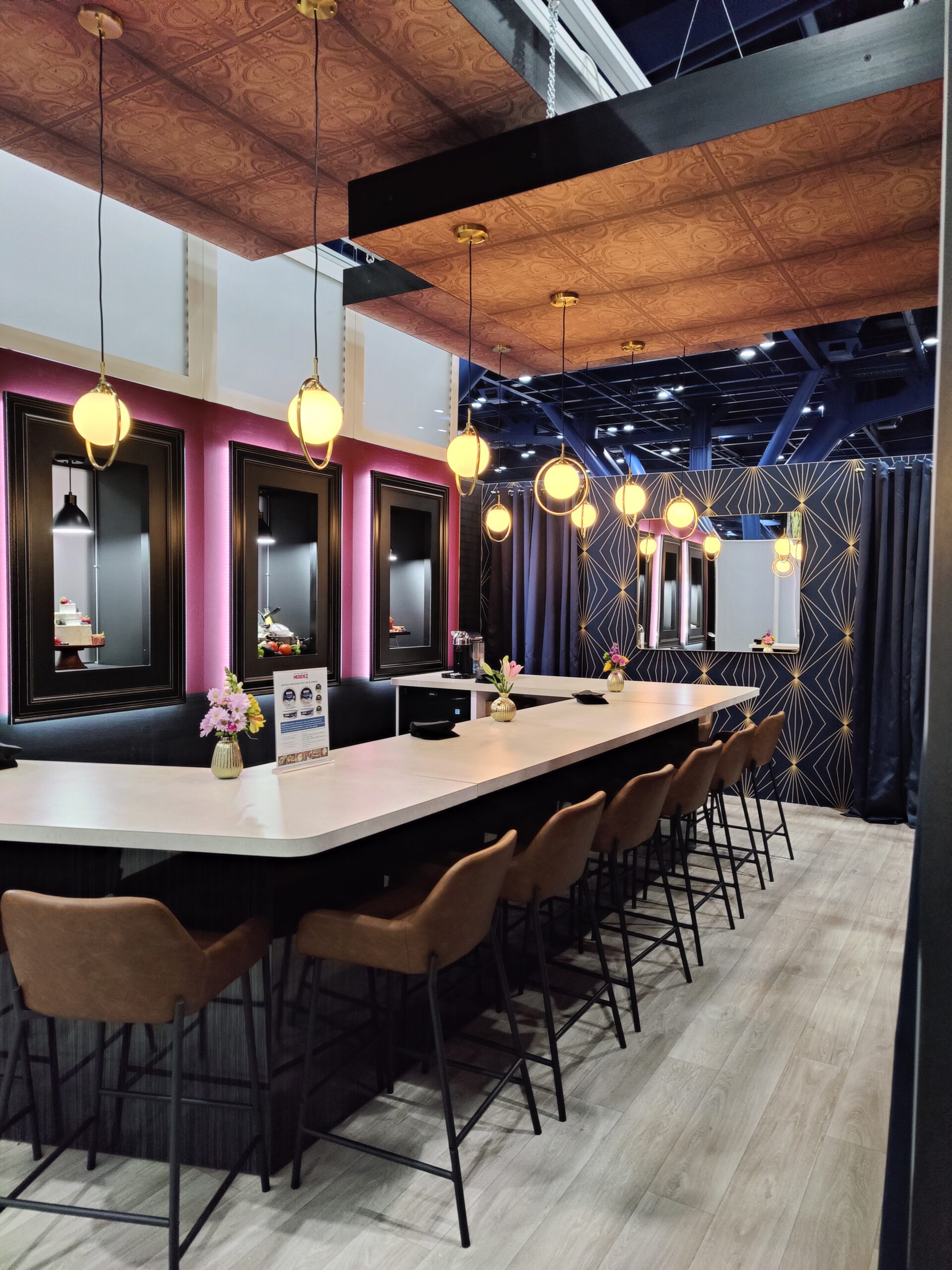
Attendees remember spaces they can imagine themselves in more than displays they’re pitched at. For Hormel Foods’ 50×70 exhibit at IDDBA, we built a VIP lounge inside the space: a private room where retailers could sit down, meet with the team, or bring their own customers in for a real conversation instead of a hallway pitch. The walls held framed art, except the art was Hormel’s food, styled and lit like it belonged in a gallery. The room read like a speakeasy, not a display case, which is exactly why people wanted to stay in it instead of glancing in and moving on.
Give People a Reason to Stop and Stare
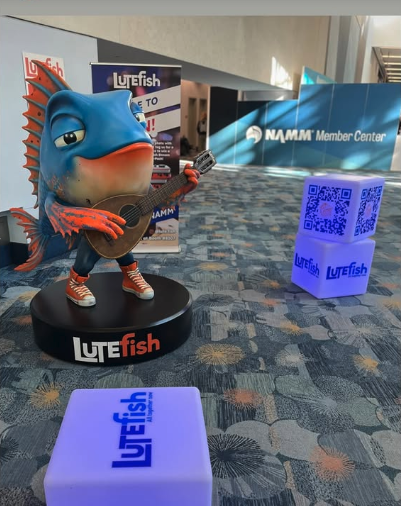
A striking, on-brand photo moment does something a product display can’t: it pulls foot traffic from across the hall and creates a social loop that extends past the show floor. To extend Wenger’s floor presence, we built Louie the Lutefish, a larger-than-life 3D mascot positioned across the hall from the main exhibit as a beacon that drew attendees back toward it. Louie wasn’t there to explain a product feature. His job was simpler: give people a reason to stop, smile, and pull out their phone. Every photo became a branded moment.
Show the Product in Its Real Environment
Sometimes the fastest way to make a product make sense is to show it doing its job. For Bridgestone’s trade show exhibits, we built custom stands that displayed tires the way they’d actually be encountered: staged in dirt, grass, and terrain instead of standing upright on a plain rack. The display did the explaining before a sales rep said a word.
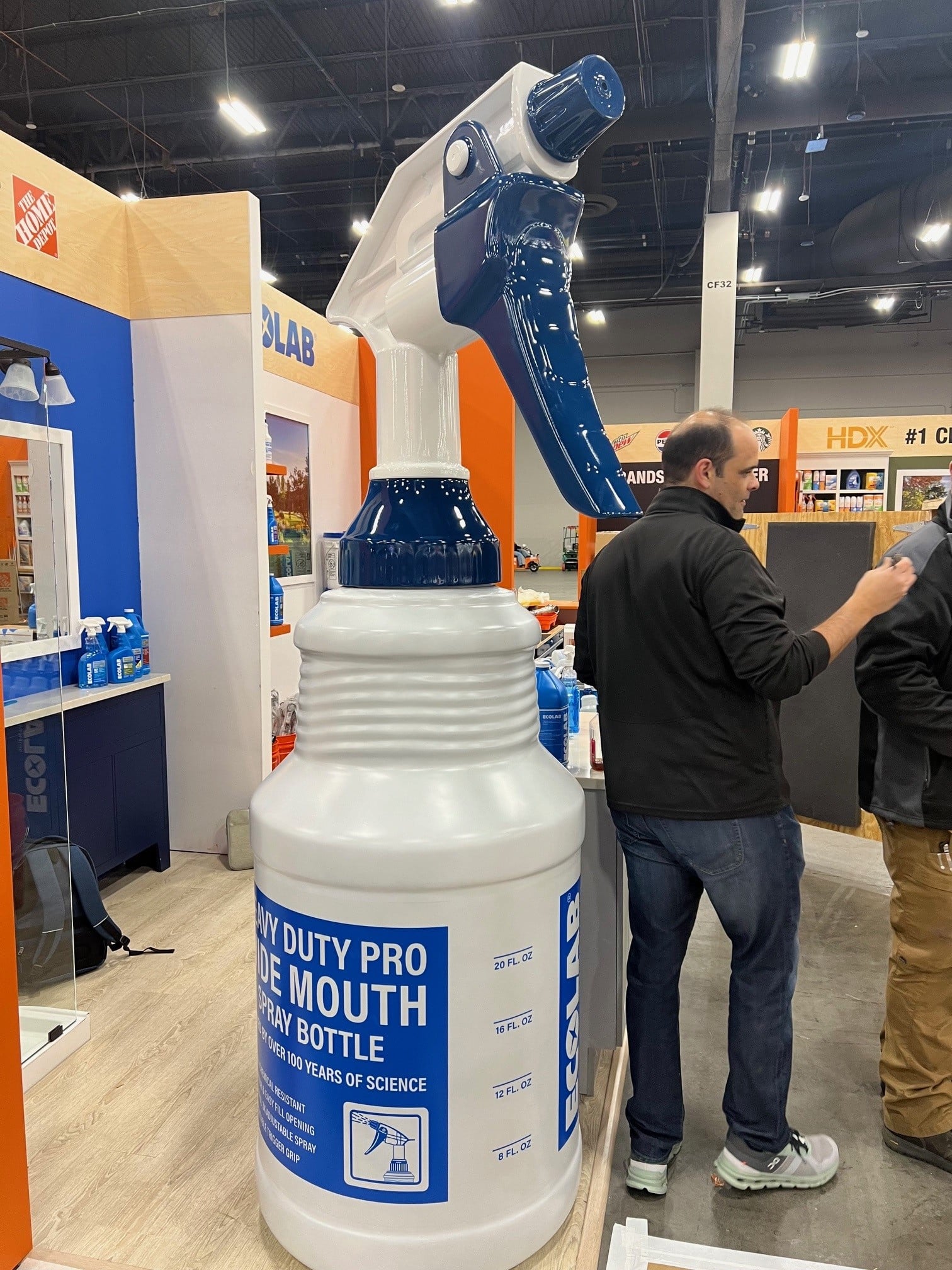
Scale works the same way. For Ecolab, we built an oversized spray bottle to anchor conversations at business meetings and on the show floor around a new product launch. A giant, unmissable version of a recognizable object gives attendees an instant visual anchor, something to reference throughout the rest of the conversation.
Turn a Technical Feature Into Something Playable
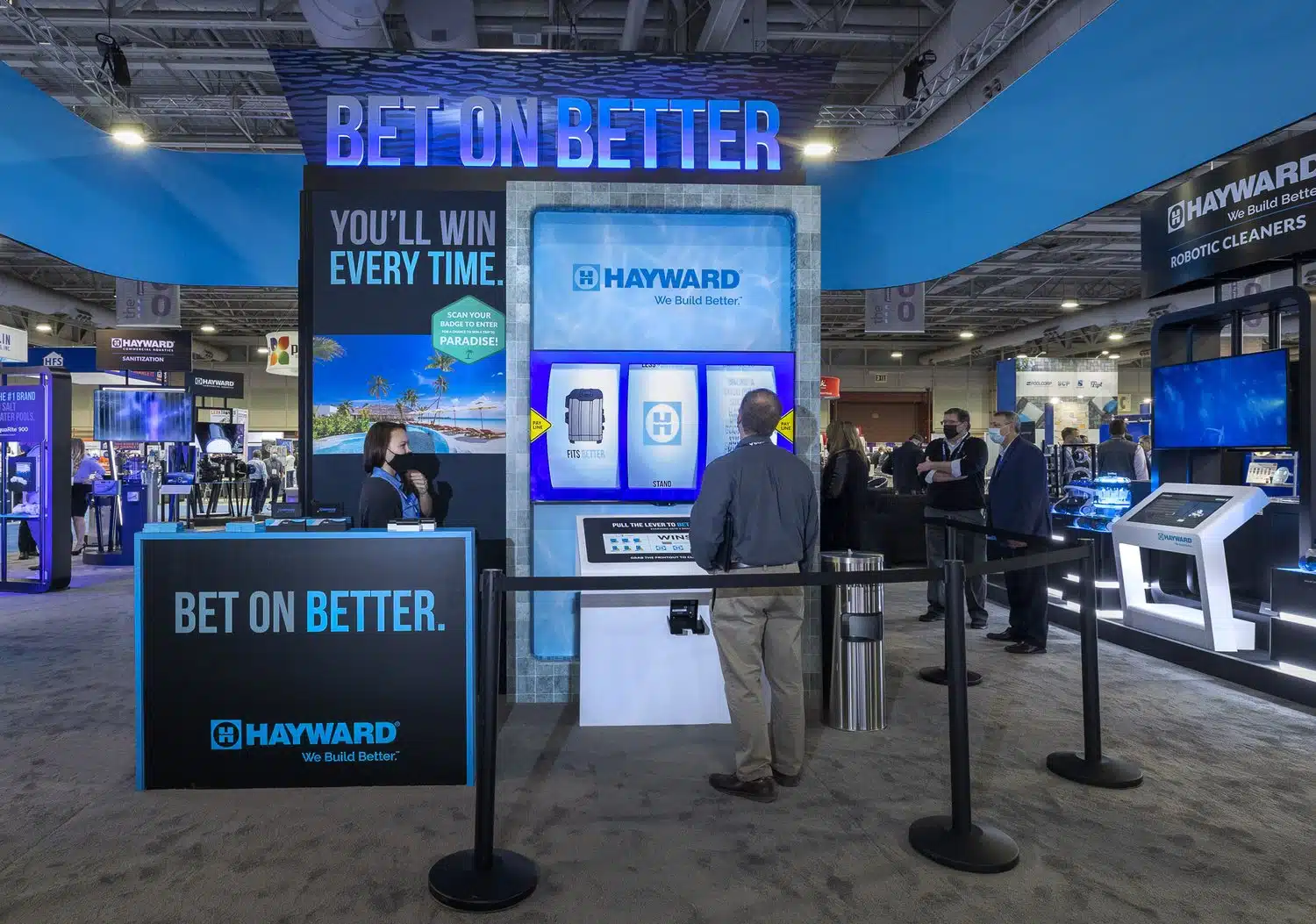
Some product lines are built to perform, not to turn heads, which makes them the hardest sell on a crowded floor. Hayward’s pumps, filters, and salt systems fit that description. At the Pool & Spa Show, we built two custom interactive games to solve that problem directly: a working slot machine set inside a swimming pool-shaped structure, and a two-player 8-bit arcade racer.
Each game translated a real selling point into something attendees could physically do. The slot machine reframed switching brands: instead of a gamble, choosing Hayward was a win, and every pull of the lever reinforced the message. The arcade racer built a genuine product advantage, that Hayward systems require less salt, into the actual mechanic of the race. Both games captured attendee contact information as part of the play, connecting Hayward directly with the pool builders and service pros in the room. The result was a record 924 leads, longer dwell time than any previous year, and the only fully interactive exhibit on a floor full of static displays.

Reuse the Structure You Already Have
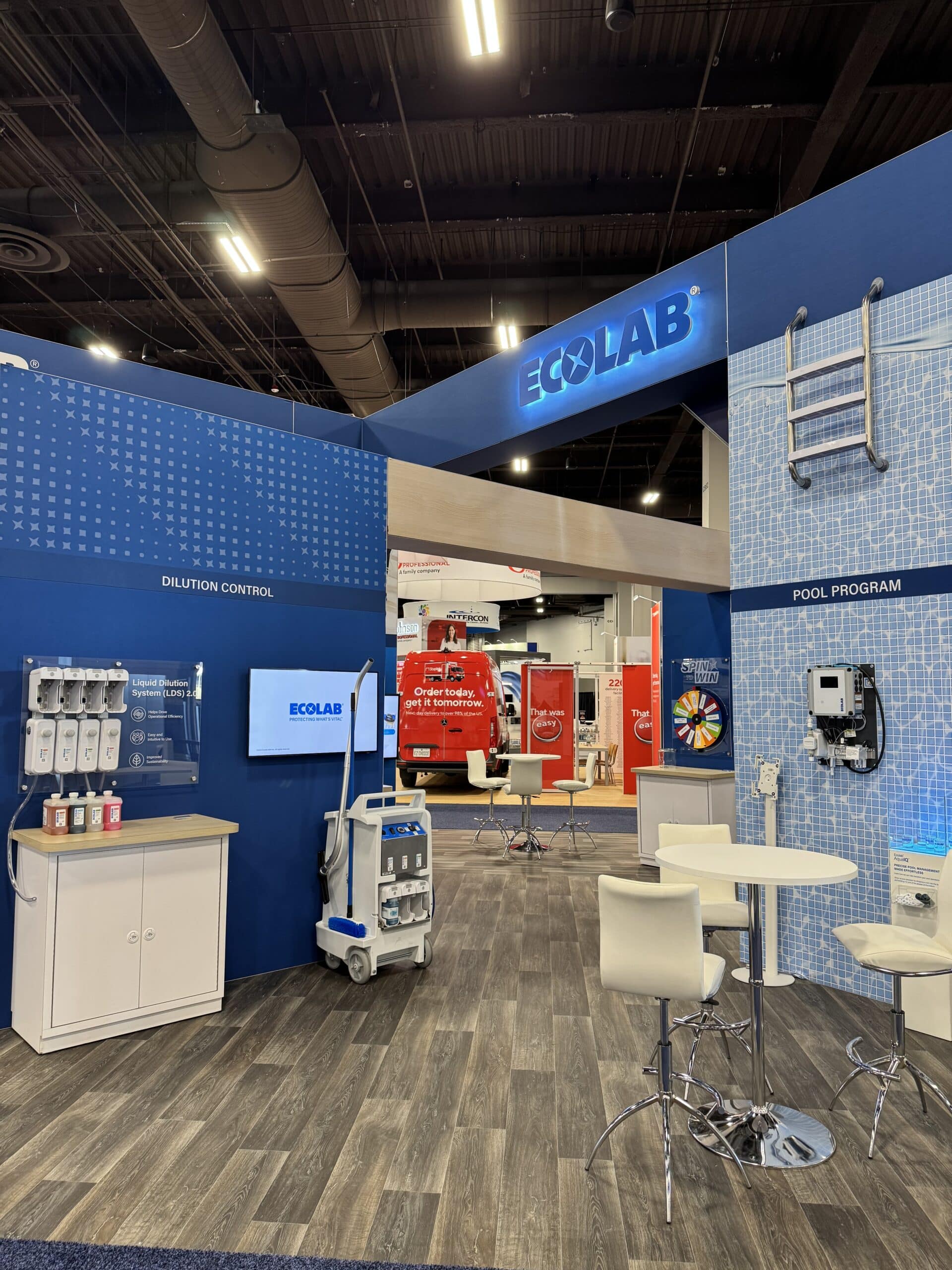
Not every strong activation starts with a blank slate or a big budget. At ISSA, Ecolab needed to refresh their presence within an existing structural footprint and a tight budget. We reimagined the space through a graphic overhaul and hotel-inspired zoning, propping distinct areas of the exhibit to represent real spaces inside a hotel: pool, laundry, restrooms. Attendees didn’t need it explained to them. They recognized the environment and understood instantly how Ecolab’s solutions applied to it. The exhibit didn’t cost more to build. It cost more to think through, which is often the more affordable version of standing out.
Common Mistakes to Avoid on the Show Floor
The exhibits that blend into a crowded hall usually make one of a few predictable mistakes. They rely on static displays and spec sheets to do the selling, even though attendees consistently rate interactive experiences higher and walk past the ones that aren’t. They treat lead capture as a separate step, asking attendees to opt in after the fact instead of building data collection into the interaction itself, which means most of that opportunity walks away unclaimed. They build a one-off activation with no reuse plan, turning what could be a multi-show asset into a sunk cost for a single afternoon. And they lead with the brand instead of the experience, opening with what a company offers instead of giving attendees something to do first. Attention has to be earned before a pitch gets to land.
Frequently Asked Questions
What makes an activation “experiential” instead of just a display?
A display asks someone to look. An experiential activation asks them to do something: play a game, take a photo, walk into a space, pull a lever. That shift from watching to participating is what makes an exhibit memorable instead of just present.
How do you decide between a mascot, game, or immersive environment?
It comes down to what the product needs to communicate and who’s walking the floor. A mascot builds shareability and foot traffic. A game translates a technical benefit into something attendees can feel. An immersive environment works best when the goal is showing how a product fits into a real space or lifestyle. Most strong trade show programs combine more than one.
Does experiential marketing work for functional products?
It’s often where it works best. A product that isn’t inherently exciting on a spec sheet can still earn a physical, memorable moment on the floor with the right activation. The less flashy the product, the more the experience has to do the work, and the more it pays off when it does.
How do you measure whether a trade show activation worked?
Foot traffic and dwell time are the first signals, but lead capture built into the experience is what proves it. Interactive activations tend to outperform static exhibits specifically because the lead capture is part of the play, not a separate step attendees have to opt into.
Ready to Rethink Your Trade Show Presence?The trade show floor rewards exhibits that give attendees something to do, not just something to look at. If you’re planning your next show, explore our trade show marketing work or get in touch with our team to talk through what an interactive activation could look like for your brand. |