Wednesday, January 6 – Saturday January 9, 2027 | Las Vegas, NV
NPARALLEL + Atomic Props designs and builds custom trade show exhibits for CES Las Vegas. From initial strategy through on-site installation, our team handles the design, fabrication, logistics, and show-floor support for your CES exhibit.
CES (Consumer Electronics Show) is the world’s largest and most influential consumer technology trade show. Organized by the Consumer Technology Association (CTA) and held annually in Las Vegas since 1967, CES draws 140,000+ attendees from more than 150 countries, 4,500+ exhibitors, and fills over 2.6 million net square feet of exhibit space across multiple venues.
This is a trade-only event. It’s not open to the general public. The people walking your booth are tech industry professionals, C-suite executives, engineers, investors, media, and buyers who are there to evaluate products and make purchasing decisions. At CES 2025, 305 Fortune 500 companies attended, and 53% of attendees held senior-level positions.
CES 2027 dates: January 6–9, 2027. Exhibit floor hours typically run 10:00 AM to 6:00 PM, with the final day closing at 4:00 PM.
Media reach: CES 2025 drew 6,900+ global media, content creators, and industry analysts. The show generated 534,000 social media mentions and 254,000 published articles and stories. If your exhibit is designed to be media-ready, the exposure opportunity is significant.
If your company operates in consumer technology, or in any industry that intersects with it, CES is likely the single most important event on your calendar. But the scale that makes CES valuable also makes it complex. A 10×10 startup booth and a 5,000 square foot island exhibit both require serious planning to get right.
140K+ Attendees
4,500+ Exhibitors
2.6M Sq.Ft Exhibit Space
305 Fortune 500 Companies
Booth space at CES runs roughly $46.50–$51.50 per square foot, depending on your CTA membership status (based on CES 2026 pricing; 2027 rates haven’t been published yet). The minimum booth size is 10×10, so you’re looking at about $4,650–$5,150 for floor space alone.
For startups, CES offers Eureka Park, a dedicated area in the Venetian Expo with turnkey booth packages starting around $1,000 for qualified companies. It’s a significantly lower barrier to entry and a smart option if you’re testing CES for the first time.
Space cost is only part of it. A common industry rule of thumb is to plan for 3x your space cost as your total exhibit investment. That covers design, fabrication, graphics, shipping, drayage, travel, hotel, staffing, technology, and on-site services. A 20×20 booth that costs $20,000 in space might run $60,000–$80,000 when you add everything up.
That number can shift based on complexity. A tech-heavy booth with interactive displays, custom fabrication, and multimedia content will cost more than a straightforward graphics-and-furniture setup. And at CES specifically, attendees expect technology. Most exhibitors invest more per square foot here than they would at a less tech-focused show.
Want to understand what your full CES exhibit investment will look like?
We can walk you through the complete budget picture. →
CES spans multiple venues across Las Vegas. The Las Vegas Convention Center (LVCC) is the main campus, but exhibit space also fills the Venetian Expo, ARIA, and Fontainebleau. The Sphere hosts high-profile presentations.
The LVCC completed a $600 million renovation ahead of CES 2026, including a refreshed Grand Lobby in Central Hall and improved wayfinding throughout the campus.
Here’s how the show is organized:
Focus areas: Major brands, immersive entertainment, gaming, A/V, advanced manufacturing.
Highest foot traffic. Renovated Grand Lobby.
Focus areas: Vehicle tech, mobility, autonomous driving, EV, eVTOL, marine.
Dedicated mobility stage. Steps from Fontainebleau (CES Foundry).
Focus areas: AI, IoT, smart cities, energy, B2B enterprise, 5G, cybersecurity.
Robot Pavilion debuted at CES 2026.
Focus areas: Design & source, accessories, international manufacturers.
Shuttle drop-off point. Component sourcing focus.
Focus areas: Lifestyle, digital health, fitness, smart home, food tech, Eureka Park (startups).
Tech Express shuttle connects to LVCC.
Focus areas: Advertising, marketing, media, content creators.
Typically closes on the final show day.
Getting around: The Vegas Loop provides underground Tesla transport from Resorts World to LVCC. The monorail and CES shuttle system connect key locations too, but travel time between distant venues adds up fast. If you have meetings across campus, build buffer time into your schedule.
Earlier than you think. If you’re targeting CES 2028, planning should already be underway by early 2027. Here’s a realistic timeline:
| Timeframe | Key Actions | ||
|---|---|---|---|
| 12+ Months | Define your objectives and begin booth space selection. CES uses a seniority points system that gives returning exhibitors priority placement. If you’re new, you’ll choose from what’s available after established brands have made their picks. This is also when to engage an exhibit partner. The best firms book up early for January shows. | ||
| 9–12 Months | Finalize your booth location and begin design concepting. Book hotel accommodations now. CES’s own site warns that rates increase as January approaches and some hotels sell out entirely. | ||
| 6–9 Months | Approve your final design and begin fabrication. Plan your staffing and start developing your messaging strategy and demo content. | ||
| 3–6 Months | Order utilities and services through the CES exhibitor portal. Coordinate shipping and drayage. Plan pre-show marketing and submit press materials. Register your team for attendee passes early; CES pricing jumps significantly after December 1. With 6,900+ media in attendance, getting on their radar before the show matters. | ||
| 1–3 Months | Train booth staff. Finalize and test all demo content and technology. Confirm schedules and pre-schedule meetings with key contacts, journalists, and partners. | ||
| Show Week | Installation and dismantle (I&D), on-site execution, real-time lead capture, and daily team debriefs. | ||
| Post-Show | Follow up with leads within 48 hours. Conduct ROI analysis. Plan asset storage or refresh for the following year. | ||
Unlike industry-specific shows where a well-designed static display can hold its own, the CES audience is tech-forward by default. They expect interactive experiences, touchscreens, AR/VR integrations, and digital engagement. A booth that relies on banners and brochures will feel out of place here.
CES 2025 drew 6,900+ media and content creators and produced 254,000 published articles. If your exhibit is designed with press visibility in mind (clear hero shots, demo-worthy moments, a story that’s easy to cover), you can earn exposure worth far more than your booth investment. Think about what your exhibit looks like on camera, not just in person.
LVCC has specific height restrictions and rigging requirements that vary by hall and booth size. Discovering your 18-foot structure exceeds the height limit during installation week is expensive and stressful. Plan early.
Because the expo floor is organized by product category, buyers navigate by need, not by exhibitor name.
Your booth design should clearly signal what category you’re in and what problem you solve within the first few seconds. The retailers who walk by your space might have 1,200 other exhibitors to evaluate. Make it obvious why they should stop.
Underestimating drayage costs. Drayage (the handling and movement of your exhibit materials from loading dock to booth space) is priced by weight at CES, and the rates are among the highest in the industry. Plan your exhibit with shipping efficiency in mind. Every extra crate adds to this line item.
Not pre-scheduling meetings. With 140,000+ people at the show, running into the right contact by chance isn’t a strategy. Use CES’s matchmaking tools and your own outreach to set up meetings before you arrive.
Skipping real-world testing. Test your technology in conditions that mimic the show floor, including spotty Wi-Fi and wireless interference from hundreds of neighboring exhibits. Demos that work perfectly in your office can fail on the floor.
Underestimating distances between venues. LVCC alone is massive. Getting to the Venetian Expo or ARIA adds meaningful transit time to your day.
Planning your CES Show exhibit? Let’s start the conversation.
What Should You Know About CES Logistics?
Union labor is required at LVCC. All installation and dismantle work at the Las Vegas Convention Center must be performed by union labor. Your exhibit partner should coordinate this, but it affects both your timeline and your budget. If you’re used to shows where your own team handles setup, CES works differently.
Shipping deadlines are firm. Because of CES’s scale (multiple venues, 4,500+ exhibitors), logistics coordination starts months in advance. Marshaling yard schedules fill up, and missing a shipping window means paying premium rates for expedited handling.
Badge pickup is on-site only. CES badges are never mailed in advance. Everyone picks up their own badge at a remote badge pickup location with a government-issued photo ID. No proxies allowed. Plan arrival time accordingly.
We’ve been building exhibits for CES for years.
Every CES project starts with a strategy session. We define your business objectives, identify the audience segments you’re targeting, determine what needs to be showcased, and set your budget and timeline. CES requires more lead time than most shows, so we start early and build in contingency for the curveballs that always come up.
Our 160,000 square foot facility in Minneapolis houses designers, engineers, CNC machinists, metalworkers, scenic painters, and graphic production specialists, all under one roof. Your CES exhibit is designed and built by one team. What gets approved in design is what shows up on the floor in Las Vegas. No handoffs between vendors. No interpretation gaps.
CES audiences expect interactive technology, and we build it in from the start, not as an afterthought. That includes AR/VR experiences, interactive displays, touchscreen applications, and our proprietary NP CAPTURE lead capture system for real-time lead collection and qualification on the show floor.
We handle shipping, freight coordination, drayage management, union labor coordination at LVCC, I&D supervision, and on-site support throughout the show. Our team is on the ground during CES to troubleshoot, adjust, and keep things running.
If you’re committed to exhibiting at CES for multiple years, need a unique footprint that matches your brand identity, or require specialized features like built-in foodservice equipment, live demo stations, or large-format product displays, a custom-built exhibit gives you the most control and impact.
Custom exhibits also make sense when you attend several trade shows annually and want a design that can adapt across different floor plans.
If this is your first time at the CES Show, you’re working within a tighter budget, or you’re testing the convenience retail channel before committing long-term, a rental exhibit keeps your investment lower while still giving you a professional presence.
Our Rent & Reuse program gives you a custom look with rental economics. We design a booth tailored to your brand using components from our inventory, so it looks purpose-built without the full custom price tag.
Not sure which direction makes sense for you?
We can walk you through the options based on your goals, budget, and how many years you’re planning to exhibit. →
CES is unlike any other trade show. The scale, logistics, and audience expectations are all amplified. If this is your first year, here are the essentials:
1
Start earlier than you think. Book your booth space as soon as you secure your CES registration. Hotel rooms near LVCC sell out months in advance. Request your exhibitor service kit as soon as it’s available and review every deadline carefully. Late fees at CES are not trivial.
2
Your booth competes with thousands of other exhibits, many backed by six- and seven-figure budgets. You don’t need to spend at that level, but your design needs to be intentional. Focus on one clear message, one strong demo, and one reason for someone to stop.
3
Don’t rely on foot traffic alone. Use CES’s exhibitor tools to get listed in the show directory and app. Run pre-show outreach to your target contacts. And plan your lead follow-up process before the show, not after. At a show with 140,000 attendees, your leads are being contacted by dozens of other exhibitors too. Speed wins.
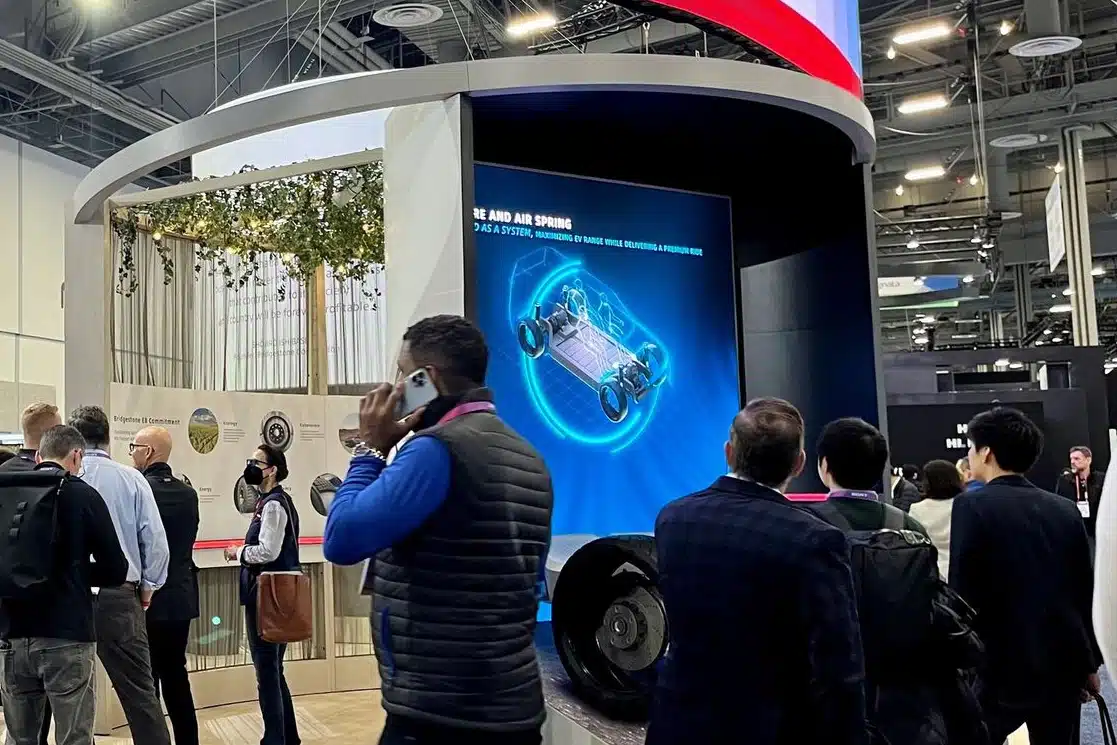
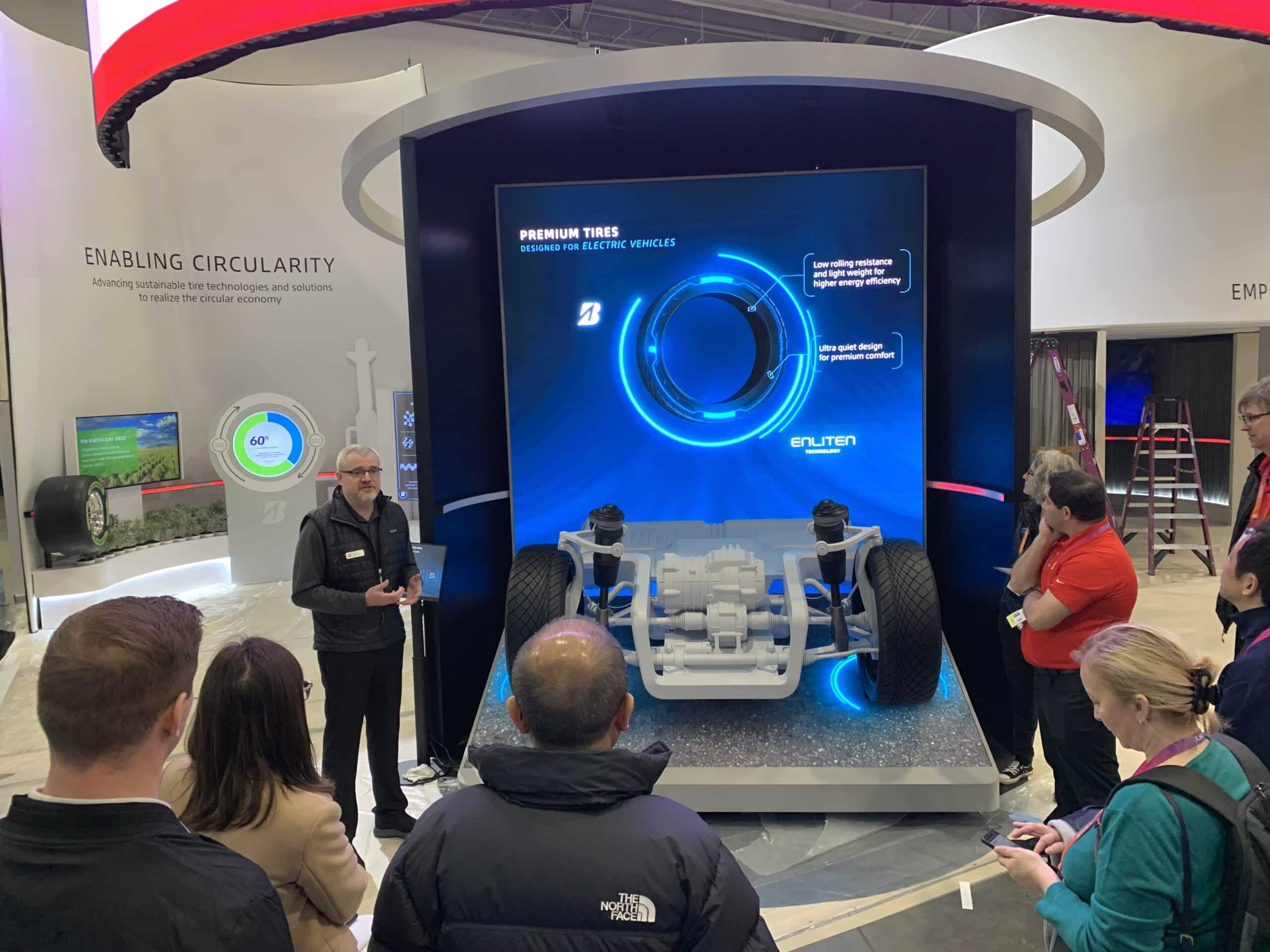
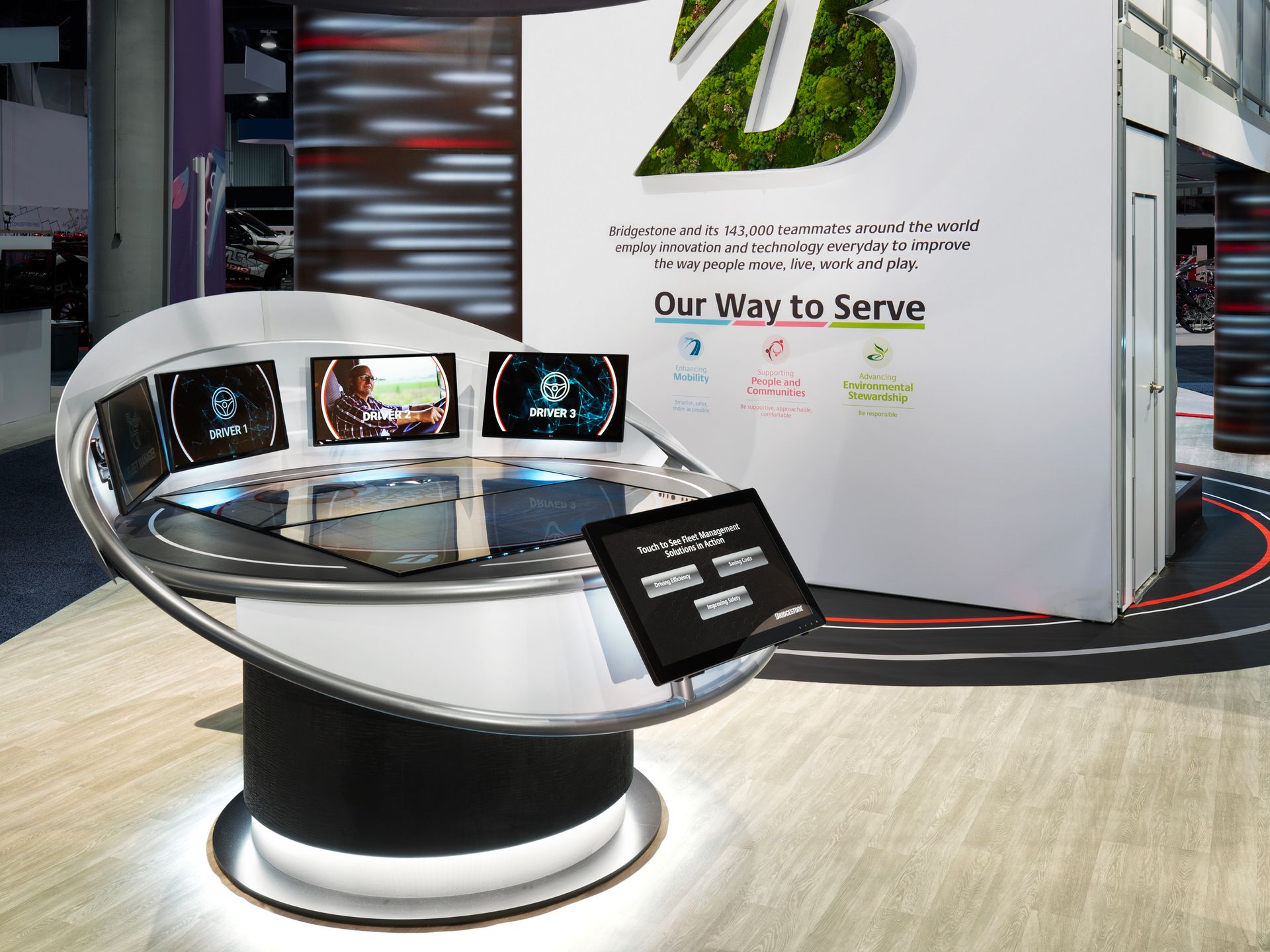
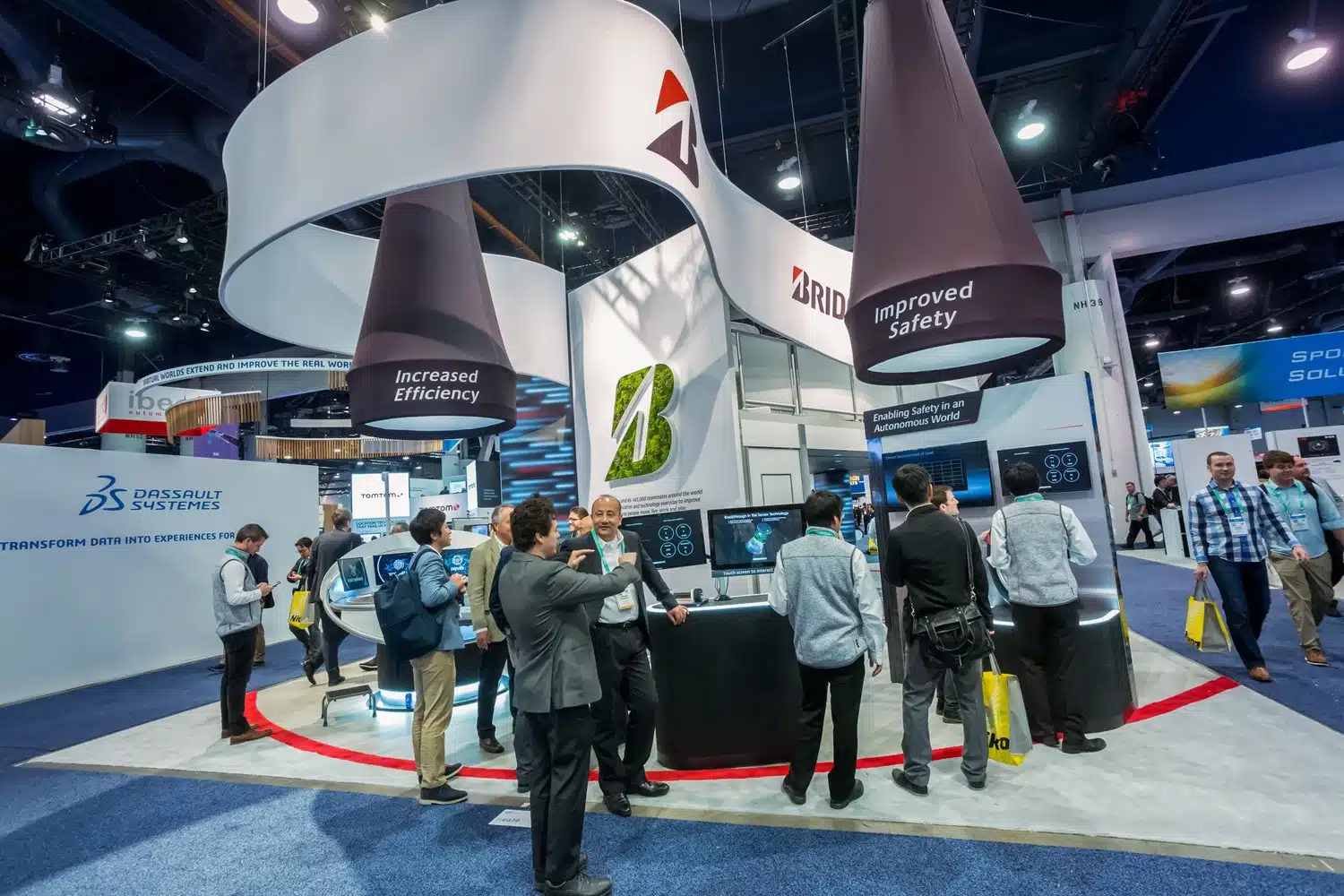
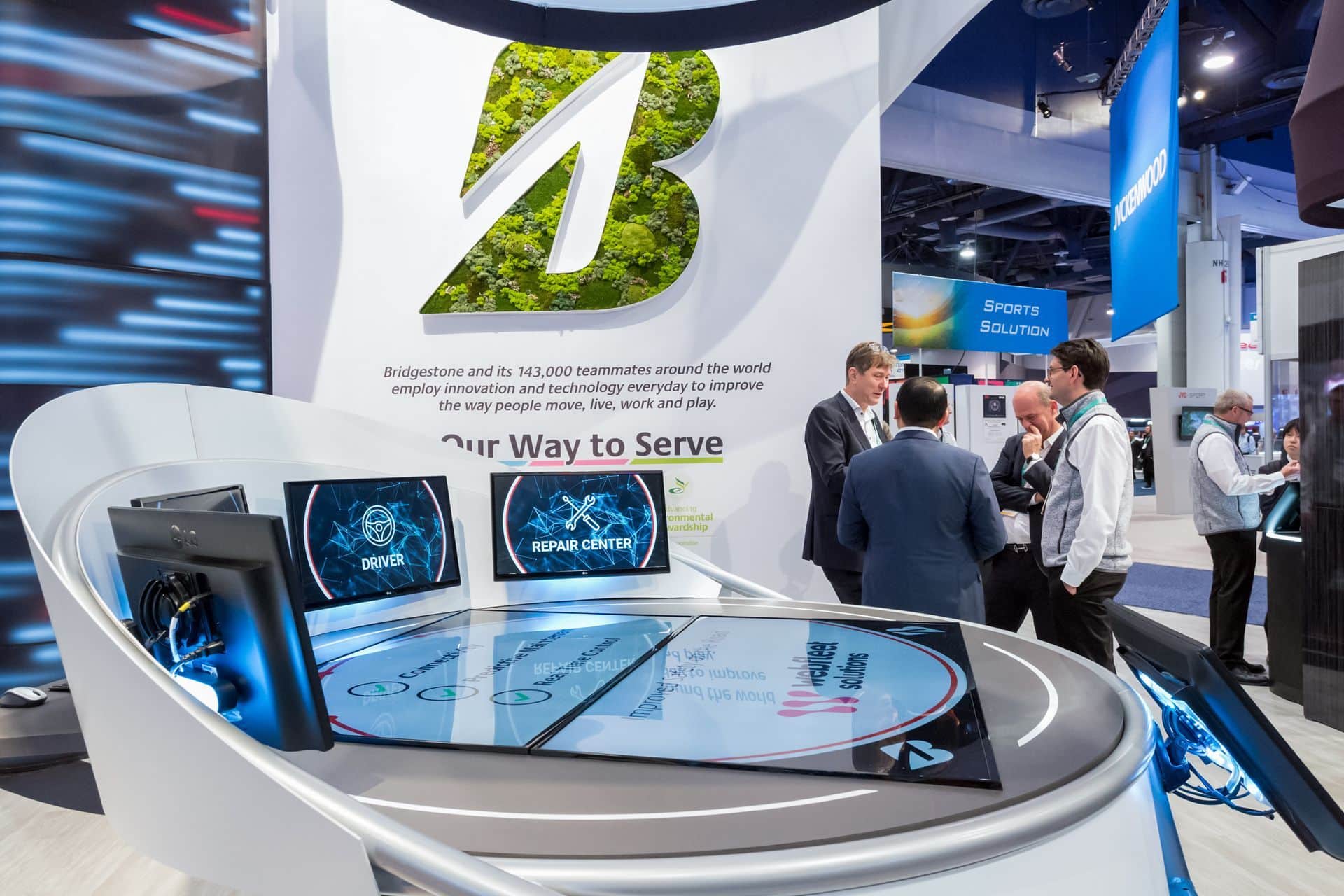
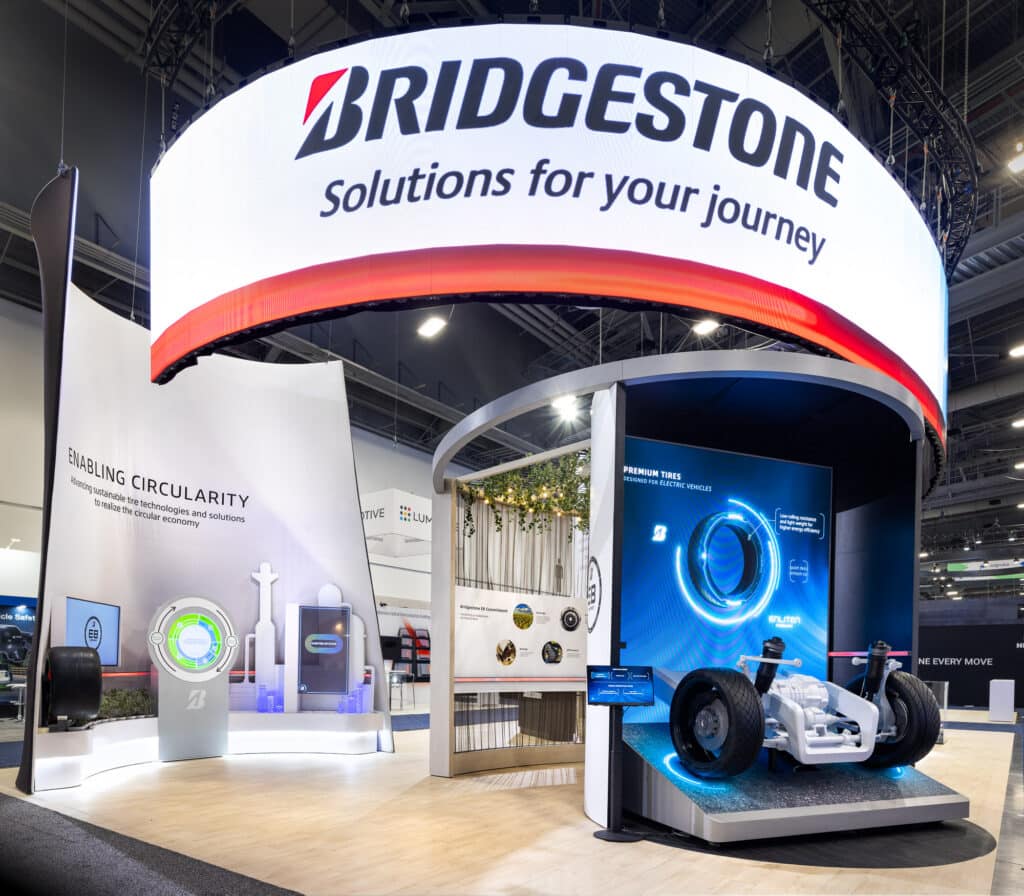
Bridgestone recognized CES as a critical platform to showcase their evolving commitment to sustainability and innovation. With a focus on social, customer, and future sustainability initiatives, Bridgestone needed an exhibit that would draw in a diverse audience and foster meaningful interactions.
The challenge was to create a visually striking and interactive experience that communicated Bridgestone’s refreshed brand positioning and reinforced their role as a leader in sustainable solutions.
100s
Leads
67,000
Social Media Impressions
32
Media Placements
7
Podcast Inclusions

It’s never too early to start planning for CES. Ideally, you should begin 9-12 months in advance if you’re looking for a truly immersive and experiential environment. This advanced planning will ensure everything from strategy and design to fabrication and logistics is thoughtfully accounted and planned for. Starting early allows for creative flexibility, approvals, and securing premium resources like booth placement and early discounts.
Yes. CES spans multiple venues, including the Las Vegas Convention Center (LVCC), Sands Expo, and nearby hotels, which each have unique layouts, rules, and access points. Understanding floor plans, freight access, and setup timelines ahead of time will help you avoid delays. For example, the LVCC requires precise scheduling for freight deliveries, and space limitations can influence your booth design.
Pre-show planning is critical to a smooth CES experience. This includes registering early to secure prime booth locations, finalizing your design well ahead of deadlines, and understanding CES regulations like height restrictions and fire codes. It’s also a great time to plan pre-show promotions, align your messaging strategy, and ensure your technology integrations are tested and ready to go. A large part of pre-show planning should be around measurement, if your team can identify key objectives and what’s important to measure, our team can help create integrations and experiences that drive towards these objectives.
At CES, the possibilities are endless. We specialize in creating custom trade show exhibits tailored to your goals— you may be interested in a sleek, tech-forward design, multi-level, interactive product demos, or immersive environments featuring AR, VR, or multi-sensory experiences. CES is the perfect place to showcase cutting-edge ideas, and we’ll ensure your exhibit stands out in this competitive landscape.
Absolutely. CES is one of the busiest trade shows in the world, which makes logistics planning crucial. You’ll need to consider drayage costs, advanced warehousing options, transportation schedules, and labor for installation and dismantling (I&D). Working with a partner like NPARALLEL + Atomic Props ensures these details are expertly managed so you can focus on your exhibit and audience.
Common challenges include managing tight timelines, adhering to strict show regulations, and navigating the high cost of exhibiting. The sheer scale of CES means setup and breakdown can be logistically intense, and delays are costly. Our team’s expertise ensures every challenge is addressed—whether it’s coordinating last-minute changes, securing permits, or handling unexpected venue hurdles.
As CES veterans, we know the details that make all the difference: schedule freight deliveries early, secure union labor for setup, and anticipate long lines for services during peak hours. Additionally, plan for power needs—tech-heavy booths require advanced electrical planning. Lastly, leveraging your space creatively with engaging visuals and interactive touchpoints ensures you stand out in a sea of innovation.
Las Vegas comes with its own unique dynamics. Be aware of union labor rules for setup and teardown, especially at major venues. Transportation during peak show hours can be challenging, so plan for delays. Take advantage of the city’s 24/7 environment to entertain clients, but ensure your team is well-rested for show days. Finally, shipping and storage in Las Vegas can be expensive—our experience helps you optimize costs while keeping your booth ready for success.
We’re here to simplify your CES experience by handling logistics and offering strategic recommendations to maximize efficiency. For example, we recommend staying at Resorts World, which is connected to The Loop—an underground Tesla transportation system that provides a fast and cost-effective way to reach the convention center. Let us take care of the planning details so you can focus on engaging with your audience and achieving your event goals.
At NPARALLEL + Atomic Props, we go beyond designing impactful exhibits by providing strategic recommendations tailored to your business objectives. From crafting cross-channel campaigns—such as social media outreach, personalized mailers, and exclusive invitations to boost booth traffic—to identifying opportunities for extending engagement beyond the show floor, we ensure every element aligns with your goals. We emphasize the importance of connecting with your audience in advance, scheduling pre-show meetings, and building awareness before the event. Our holistic approach ensures you connect with your audience, generate leads, and achieve measurable results at CES.
CES isn’t a show where you can set up a pop-up banner and call it a day. The audience is sophisticated. The media is everywhere. And the technology on display needs to actually work, reliably, for four straight days of heavy traffic.
We understand what consumer technology exhibitors need because we’ve built it. Interactive product demo environments with custom mounts and secure display hardware. LED video walls with content management systems that run on schedule without someone babysitting them. Charging stations, connectivity hubs, and meeting spaces built into the exhibit architecture so your team can host conversations and close deals right on the floor.
Our 160,000 square foot facility gives us the space to prototype, test, and refine every element before it ships to Las Vegas. We don’t find problems on the show floor. We find them in Minneapolis, fix them, and ship a finished product.
Whether you’re exploring CES for the first time or planning your next year on the show floor, our team can help you get from strategy to installation.