
Food & Beverage Exhibits
Food and beverage trade shows are built around tasting, touching, and trying.
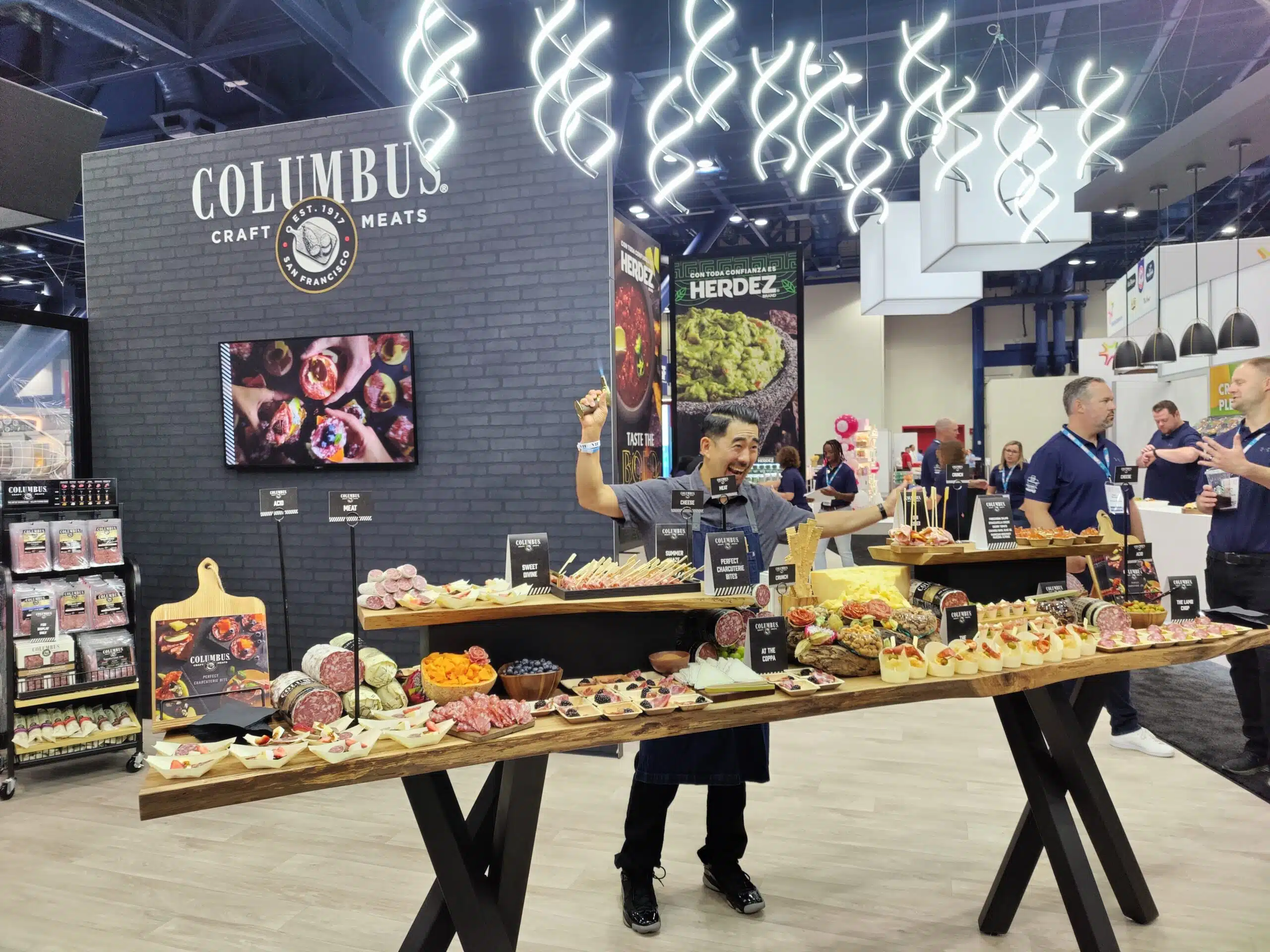
Your exhibit needs to handle all of it: live cooking demos, refrigerated product displays that hold temperature through a 10-hour show day, and sampling stations that move hundreds of attendees per hour without bottlenecking your booth entrance.
INDUSTRY CONTEXT
Food and beverage exhibits have infrastructure requirements that don’t exist in most other industries. The booth isn’t just a branded environment. It’s a functioning kitchen, a refrigerated showroom, and a high-volume sampling operation, often all at the same time.
Live cooking demonstrations need commercial-grade power drops (often 200-amp service or higher), dedicated ventilation to manage heat and smoke, and prep areas that meet local health department standards. Most convention venues enforce those standards through their own permitting process, which adds lead time your project schedule needs to account for.
Refrigerated product displays require consistent temperature zones that hold up across a full show day, not residential coolers plugged into shared outlets. Sampling stations need traffic flow engineering so attendees can try your product without blocking aisle traffic or creating crowd-control problems for your booth staff.
Then there’s the sensory dimension. Food brands compete on taste, smell, and visual presentation. Your booth design has to manage all three. Direct cooking aromas toward the aisle to draw foot traffic. Light product displays so colors read accurately under convention hall fluorescents. And create tasting environments where attendees can focus on your product without sensory interference from the exhibitor next door.
An exhibit partner who treats these as last-minute add-ons will cost you change orders and compromise your on-floor experience. We build food-safe infrastructure, sampling logistics, and sensory design into the exhibit from the first concept meeting. From concept through installation, everything is designed, fabricated, and project-managed in our 160,000 sq ft Minneapolis facility.

SHOWS WE KNOW
We build for the shows that set this industry’s annual calendar, from foodservice flagships like the NRA Show to specialty and natural products events like Expo West.
The National Restaurant Association Show draws 55,000+ foodservice professionals to Chicago’s McCormick Place every May. Live cooking demos, equipment showdowns, and kitchen technology drive exhibit design here.
The convenience and fuel retailing industry’s main event. 25,000+ attendees evaluating everything from packaged snacks to dispensed beverage programs. Sampling volume is intense.
The largest natural, organic, and healthy products trade show in North America. 65,000+ attendees pack the Anaheim Convention Center. Booth sampling is the primary engagement driver.
The confectionery and snack industry’s annual showcase. Sampling infrastructure and product display are everything here. Attendees come to taste.
The International Dairy Deli Bakery Association show focuses on the perimeter of the grocery store. Refrigerated and frozen product displays are standard, not optional.
The Specialty Food Association’s flagship event for artisan, imported, and specialty products. Premium presentation and curated tasting experiences set the tone.
OUR WORK
When Hormel Foods needed an exhibit for the NRA Show that could run live cooking demonstrations across a 50’ x 100’ island, the design had to balance commercial kitchen infrastructure with a brand environment that invited 55,000 attendees to stop, watch, and taste.
Live cooking demonstrations, product sampling stations, and a branded kitchen environment across a 50’ x 100’ island. The client called it their best NRA Show ever.
View Case Study →
Capabilities
Exhibits engineered for live cooking demos, refrigerated displays, high-volume sampling, and the commercial-grade infrastructure food brands require on the show floor.
Oversized product replicas, branded food truck builds, interactive menu walls, and dimensional signage that gives your booth a visual anchor visible from across the hall.
Interactive recipe builders, touchscreen product configurators, AR-enhanced packaging demos, and connected tasting experiences that collect attendee data while they sample.
FAQS
Food and beverage exhibits require dedicated high-amperage electrical circuits, plumbing, ventilation, and temperature-controlled display zones. But the piece most exhibitors miss is permitting. Many convention centers require health department approval for any booth conducting live food preparation or open sampling, and those permits have their own timelines. Your exhibit partner needs to build permitting into the project schedule from day one, not treat it as a last-week checkbox.
Live cooking demo stations need dedicated power circuits separated from the rest of your booth’s electrical load, heat-rated surfaces, and ventilation to manage smoke and steam. The layout also matters: attendees need clear sightlines to the cooking area without crowding the aisle. We design demo kitchens as integrated exhibit zones, not afterthought stations, so the infrastructure is part of the booth architecture from the start.
Yes. We build temperature-controlled display zones directly into the exhibit structure. These aren’t residential coolers on a shelf. They’re custom-fabricated refrigerated cases designed to hold consistent temperature across a full show day, display products at retail-quality presentation standards, and fit within the booth’s overall design language. For frozen products, we’ve built dedicated freezer environments with glass-front displays and controlled access.
Most food and beverage exhibit programs need 6 to 9 months of lead time. The infrastructure requirements (plumbing, electrical, ventilation, health permits) add planning steps that simpler booth designs don’t require. For large island exhibits with live cooking demonstrations, starting 8 to 10 months out gives you the most flexibility for design revisions and venue coordination.
The best food and beverage exhibits start with an early conversation. If your next show is 6 or more months away, you still have time to get the infrastructure, design, and freight coordination right.