

Creating a captivating exhibit space is both an art and a science. Smart exhibit house design and fabrication can turn your exhibit from “just another booth” into a branded experience that people remember, talk about, and genuinely want to engage with.
Below is a practical guide with concrete actions you can apply to your next trade show program.
Start With Strategy, Not Structure
Before you think about walls, lights, or furniture, get crystal clear on why you’re exhibiting.
Most exhibit houses or experiential marketing agencies like to work with project and creative briefs to help organize and formulate the strategic path forward. Here are some key questions to work through and share with your exhibit house.
- Primary objective: Generate leads? Launch a product? Meet with existing customers? Recruit?
- Target audience: Who do you want in your exhibit? Job titles, industries, buying roles?
- Key message: What one idea should visitors remember when they leave your exhibit or the show as a whole?
- Desired actions: Book a meeting? Scan a badge? Try a demo? Gather feedback? Purchase products or services?
Action you can take this week:
- Write a one-page Trade Show Exhibit Project Brief with:
- 3 objectives (ranked)
- 1–2 target audiences
- 1 core message
- 1–2 measurable actions per visitor
Share this brief with everyone involved, including those at your company and your exhibit house — designers, sales, marketing, and leadership. It will keep all design and fabrication decisions aligned.
Turn Your Exhibit Into a Story
The most effective exhibits don’t just show products — they tell a story your audience can see, feel, and interact with.
It can be helpful to think of your exhibit experience in three layers:
- Hook (3–5 seconds):
- What visitors see from the aisle
- Captivating first glance
- Strong visuals that match your brand
- Engage (30–90 seconds):
- Simple demo, interactive element, or guided tour
- Short talking points for staff
- Deep Dive (3–10 minutes):
- Private or semi-private area for conversations or podcast and media interviews
- Case studies, ROI stories, or live product walkthroughs
Try this at your next show:
- Replace generic taglines (“Innovation for the Future”) with a specific outcome (“Cut Maintenance Costs by 30% in 6 Months”).
- Map a simple “visitor journey”:
- Where they first see you
- Where they stop
- Where conversations happen
- Where they exit (and what they leave with)
Custom vs. Modular Exhibits: How to Choose
Both custom and modular exhibits can be highly effective. The right choice depends on your goals, brand, and event schedule.
Best when:
- You need a one-of-a-kind brand experience
- Your brand requires unique architecture, finishes, or features
Advantages:
- Fully tailored to your brand identity, every element
- Maximum creative freedom for structure and layout
- Strong visual impact and memorability

Best when:
- You attend several shows with different booth sizes
- You need a cost-efficient, flexible system
- You want fast reconfiguration and reuse
Advantages:
- Reconfigurable layouts (e.g., 20×30 → 40×50)
- Lighter, easier to ship and install
- Lower total cost of ownership over multiple events
Design With Sustainability in Mind
Sustainable exhibit design is often an expectation, not a trend. When done right, it can also reduce costs over time.
Practical ways to make your exhibit more sustainable:
- Materials
- Use reusable systems (aluminum frames, modular structures)
- Choose a custom rental program where you can reuse lights, technology, and furniture
- Lighting
- Use LED lighting
- Program lighting to reduce power use when the booth is empty
- Graphics & Giveaways
- Avoid dates or specific show names on major graphics so they can be reused
- Prioritize digital content over printed handouts
- Replace low-value swag with useful, durable items or digital gifts (e.g., content, tools, reports)
Action you can take before your next show:
- Ask your exhibit house to help you identify ways to make your trade show program more sustainable:
- Preferred materials
- What can be reusable
- Rules for print vs digital
From Design to Fabrication: Bringing the Concept to Life
This is where ideas become real — and where experience matters. It is crucial to choose the right materials, and a strategic exhibit house should know exactly how to do this.
Choosing the Right Materials
Think about:
- Durability: Will this piece survive multiple shows?
- Weight: How will this impact shipping and drayage?
- Finish & feel: Does it match your brand (premium, industrial, playful, etc.)?
- Maintenance: How easily can it be cleaned or repaired on-site?
Common materials:
- Aluminum frames and structures
- Wood and laminates for warmth and texture
- Fabric for large, lightweight graphics
- Acrylic and glass for modern, clean lines
Construction and Craftsmanship
Strong fabrication shows up in:
- Clean seams and joints
- Graphics aligned perfectly with no bubbling
- Hidden hardware where possible
- Solid, stable structures that feel safe and intentional
Quality Assurance and Testing
Before anything ships, request your exhibit to show you in-person or on a video walk through:
- A pre-show preview or photos/video walkthrough of the assembled trade show booth
- Testing of:
- Lighting
- Interactive elements
- Moving parts (doors, drawers, mechanisms)
Action you can take:
- Ask for a simple “fabrication checklist” from your partner covering:
- Materials
- Hardware
- Electrical
- Graphics
- Crating and labeling
Keep this checklist for future shows to track wear, repairs, and updates.
Use Technology Intentionally (Not Just Because It’s Cool)
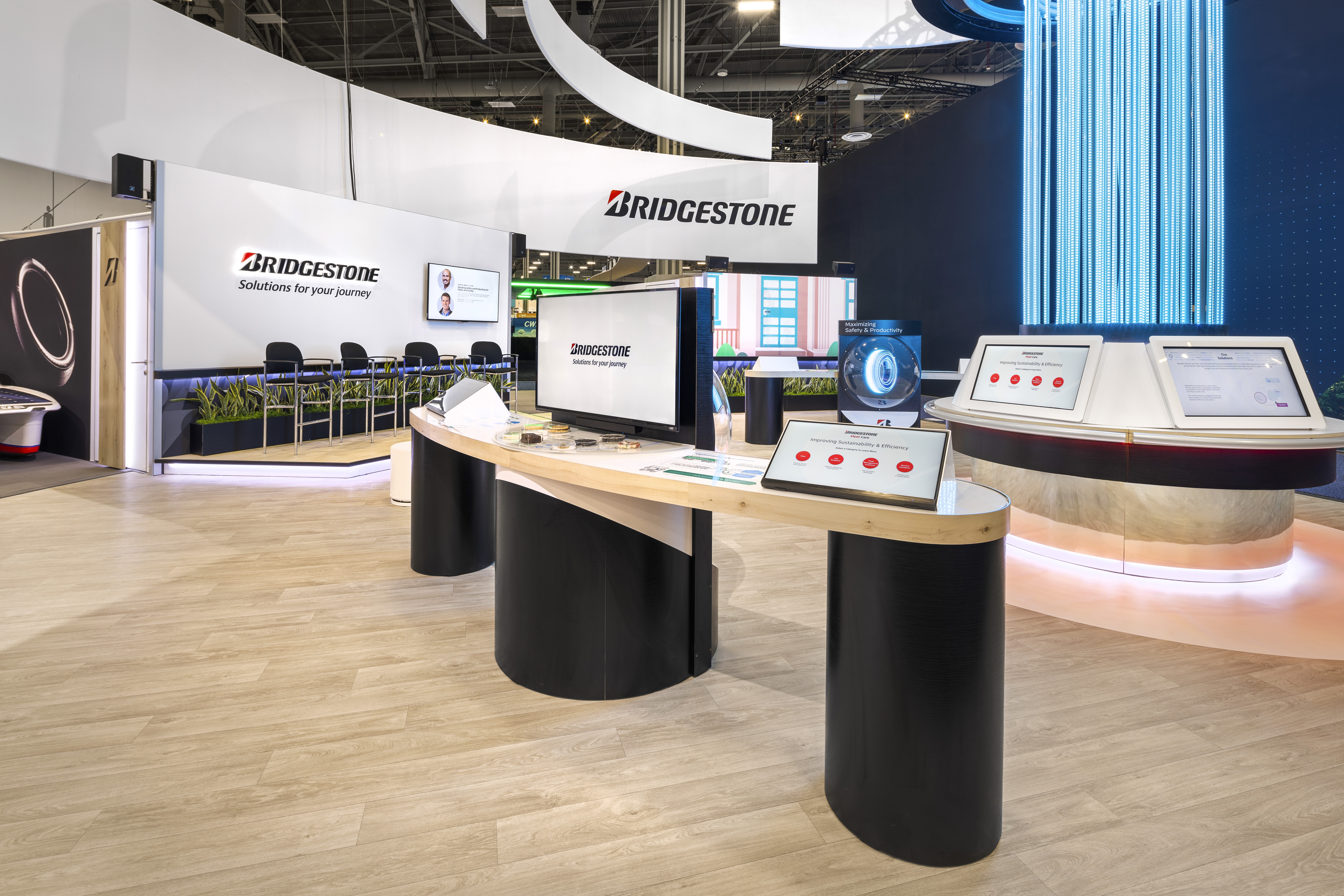
Technology should support your objectives, not distract from them.
Interactive Displays
Use touchscreens, tablets, or product configurators to:
- Explain complex offerings simply
- Capture lead data (forms, quizzes, surveys)
- Let visitors explore at their own pace
Make it practical:
- Limit each experience to 1–3 minutes
- Clearly label what each screen does
- Train staff to invite people to interact (“Can I show you this in 60 seconds?”)
Digital Signage & Lighting
Use:
- LED walls or screens for motion graphics, demos, and social proof
- Programmable lighting to highlight key areas or change by schedule
Tips:
- Keep messages on screen large and simple — readable from the aisle
- Use lighting to:
- Highlight hero products
- Separate zones (demo, lounge, meeting)
AR, VR, and Immersive Tech
Helpful when:
- Your product is large, complex, or remote to bring on-site
- You want to show “before/after” scenarios or hidden processes
Keep it visitor-friendly:
- Provide a quick explanation of what they’ll see
- Offer a “watch-only” option on a monitor for those who don’t want a headset
Data and Analytics
Use tech to track:
- Number of interactions per station
- Content most viewed or replayed
- Dwell time in key zones
Action you can take:
- For your next show, choose one tech metric to track (e.g., number of demo launches) and tie it to a specific goal (e.g., 30% of visitors complete a demo).
Working With an Exhibit House
You don’t have to do everything alone. The right exhibit partner acts like an extension of your team — helping you every step of the way.
A strong partner will help with:
- Strategy and design aligned to your goals
- Fabrication and material recommendations
- Logistics, shipping, and show services coordination
- On-site installation and dismantle
- Storage, maintenance, and reuse planning
Questions to ask potential partners:
- “How do you design around our business goals, not just aesthetics?”
- “What’s your process from brief to finished exhibit?”
- “How do you approach reuse and cost savings over 2–3 years?”
- “Can you walk us through a recent project similar to ours?”
Layout, Flow, and Atmosphere
Your exhibit layout should make it easy for visitors to enter, understand what you do, and engage.
Layout & Flow
- Keep entrances open and welcoming — avoid blocking with counters
- Place your main message and hero product in direct line of sight from the aisle
- Create zones:
- Quick view / “What we do”
- Demo / interaction
- Conversation / meetings
Atmosphere
Consider:
- Color palette: Align with brand, but also with desired mood (calm, energetic, premium).
- Sound: Avoid overwhelming volume; use directional sound where possible.
- Comfort: Provide a mix of standing and seated areas; think about staff comfort too.
Action you can take:
- Print your exhibit plan and draw arrows showing how visitors move through the space.
- Ask: “Where do we want them to stop?” If that area isn’t clearly defined, adjust your layout.
Measure, Learn, Improve
Your exhibit is part of a long-term program, not a one-off event.
After each show, review:
- Quantitative metrics:
- Leads captured
- Meetings held
- Demos completed
- Opportunities and revenue influenced (when available)
- Qualitative feedback:
- What staff heard repeatedly from visitors
- Areas that felt crowded or empty
- Tech or elements that were used less than expected
Action you can take within one week of a show:
- Hold a 30–60 minute post-show debrief with:
- Marketing
- Sales / exhibit staff
- Document:
- 3 things to keep
- 3 things to change
- 3 ideas to test next time
Bringing It All Together
Exhibit house design and fabrication are more than building a custom booth or modular booth— they’re about orchestrating a complete brand experience:
- Start with clear goals and a focused message
- Choose between custom, modular, or hybrid based on your program
- Design for sustainability and long-term reuse
- Use technology deliberately to deepen engagement and gather data
- Partner with experts who align with your strategy
- Continuously measure and refine after each show
Apply even a few of the actions above to your next event, and you’ll feel the difference — in visitor engagement, internal alignment, and long-term return on your trade show ROI investment.