
CES has always been a place to spot what’s next. New technology. New platforms. New ideas competing for attention. New exhibit trends.
But CES 2026 revealed something bigger than any single innovation: a fundamental shift in how brands think about presence, engagement, and experience.
The most successful exhibits weren’t the biggest or the loudest. They were the most intentional. They slowed people down. They told clear stories. And they respected the audience’s time.
What we saw at CES wasn’t just a trend for tech brands. It was a blueprint for how trade shows, conferences, sales meetings, and brand environments across every industry are evolving.
1. Visibility Took a Back Seat to Intentional Engagement
For years, trade shows rewarded scale. More square footage. More screens. More impressions.
At CES 2026, many brands chose a different strategy.
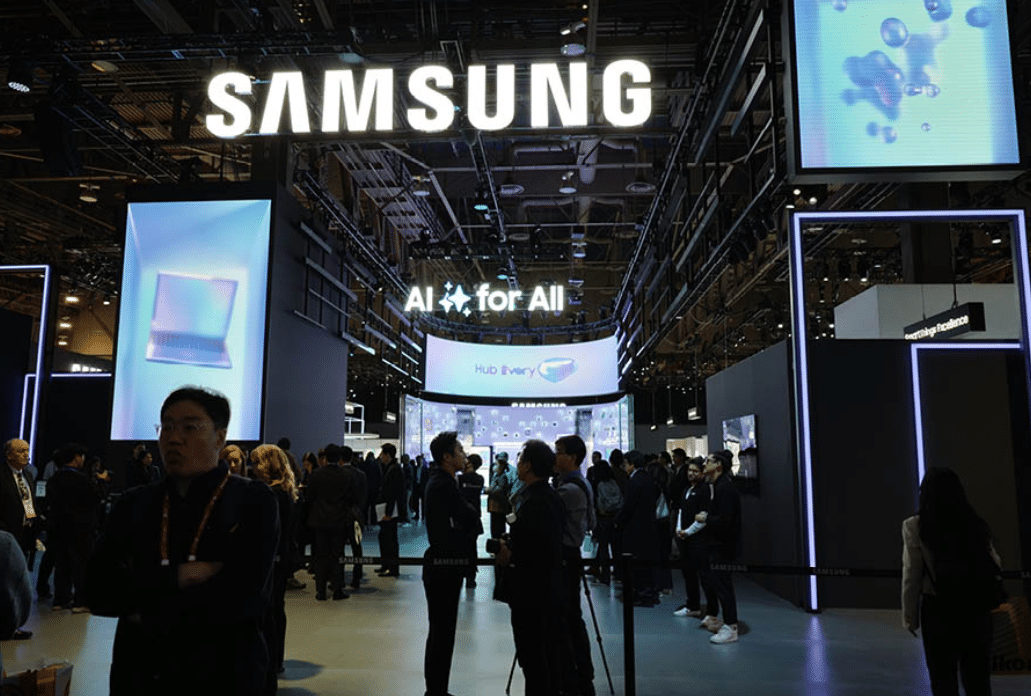
Some stepped away from the traditional show-floor arms race altogether. Samsung eliminated its traditional booth presence, opting instead for The First Look, a standalone, off-floor experience that allowed for controlled storytelling, curated audiences, and deeper engagement. Intel, long a pioneer of this approach, continued to demonstrate how off-floor and invite-only environments can create focus rather than fragmentation.
Others stayed on the floor but were clearly intentional about who they were designing for, filtering audiences through layout, messaging, and flow instead of trying to attract everyone walking by.
The mindset shift was clear:
Not “How many people can we attract?”
But “Who do we actually want to engage?”
This approach led to better conversations, stronger relationships, and more meaningful outcomes.
CES reinforced what many brands are already learning: visibility alone doesn’t equal impact.
2. Welcome Theaters Became the New Front Door
One of the most consistent design patterns at CES 2026 was the use of welcome theaters and immersive entry moments.
Rather than dropping attendees directly into dense demo environments, brands like Samsung, KEPCO, Panasonic, and Caterpillar used cinematic intro spaces to set context before product interaction began.
Panasonic had a 36-degree theater with a timed, gallery-style flow that guided visitors through a controlled narrative. Attendees entered through a cinematic moment, absorbed the story, and then moved intentionally into demos.
Dolby turned a car into a concert by encouraging people to hop into their vehicle partners, relax, and enjoy the music from their products.
These experiences did something critical:
They slowed the pace in a chaotic environment
They framed the brand story before details and specs
They created anticipation instead of overload
This reinforces a core experiential principle: experience starts before the demo. The entry moment shapes everything that follows.
3. Sustainability Showed Up in the Build, Not Just the Message
Sustainability was one of the most compelling through-lines at CES 2026, especially when it showed up physically.
Brands like Flint took a bold, tangible approach, building an exhibit largely out of cardboard and recyclable materials. The space didn’t feel temporary or gimmicky. It felt intentional, thoughtful, and aligned with their sustainability platform.
Other exhibits leaned into modular systems designed for reuse, minimal fasteners, and materials that could be repurposed beyond the show.
What made these exhibits effective wasn’t just the materials. It was the alignment:
Message matched the build
Values showed up in physical form
Sustainability felt real, not performative
How you build can communicate just as loudly as what you say.
4. Technology Supported the Story Instead of Stealing It
CES will always be about technology, but in 2026, the best exhibits didn’t let tech dominate the experience.
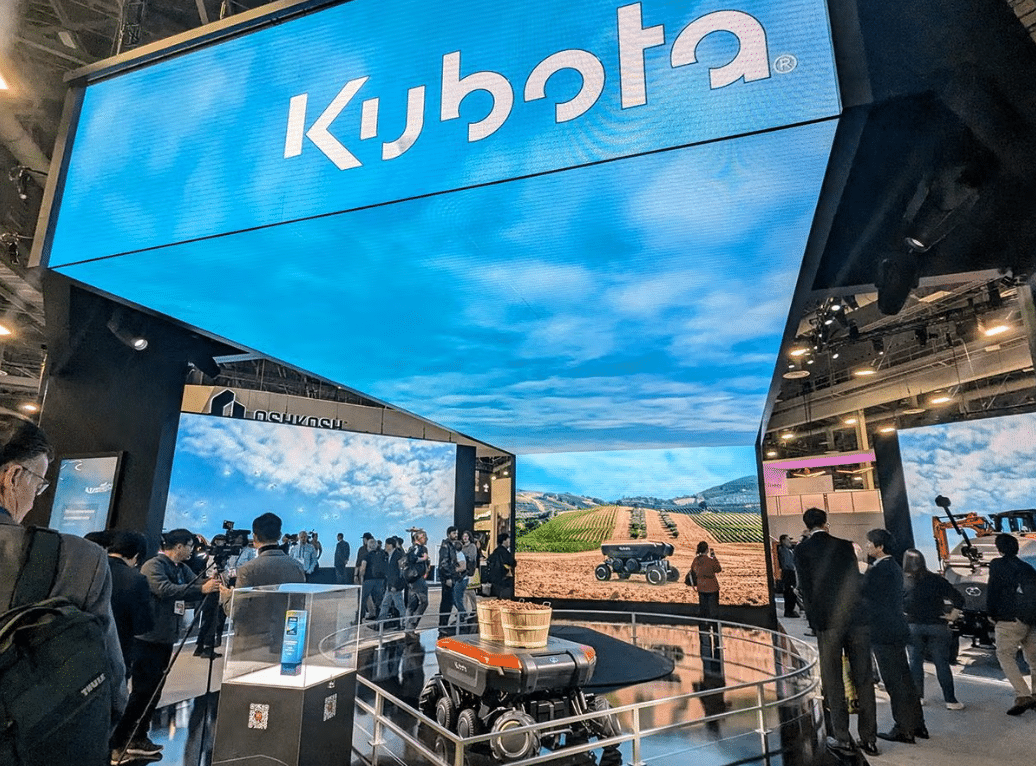
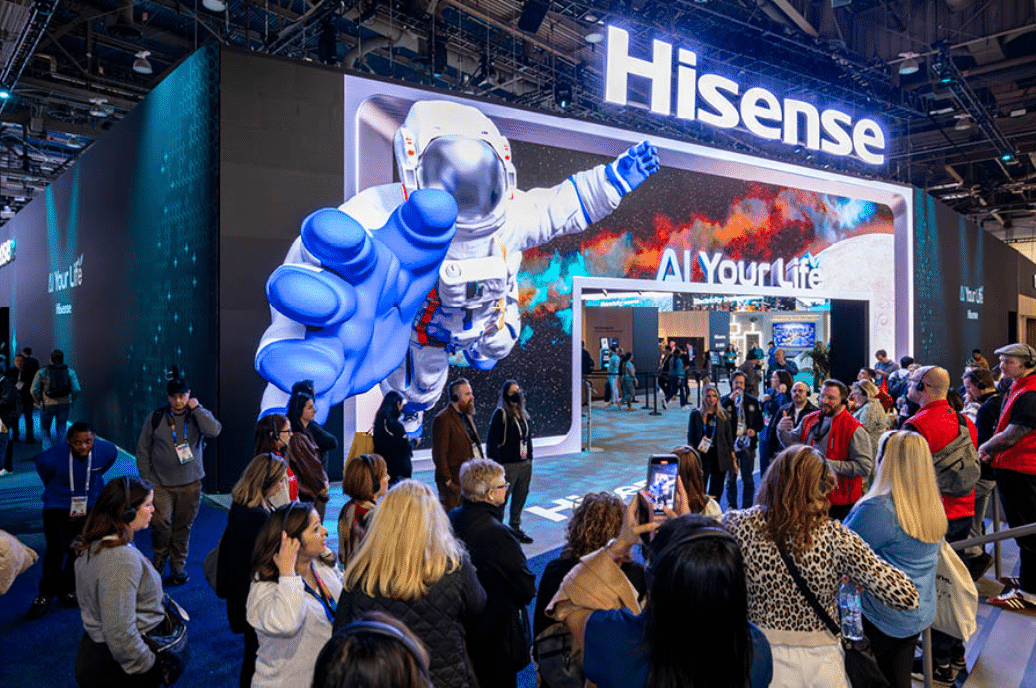
Across the floor, we saw LED walls used as architectural elements rather than billboards. Interactive moments were purposeful, not excessive. Technology supported the story instead of competing with it. People were warm, connected, and hospitable, not just moving you through their process.
We loved the Caterpillar experience. While their massively engaging technology entrance was stunning, once you walked through you were met with real, connected people who told to tell the story in a meaningful way.
This reflects a maturing approach to experiential design: technology works best when it blends into the experience and elevates understanding, and the true bonus is when technology is paired with real human connection.
When tech fades into the background, the brand story comes forward.
5. Experiences Extended Beyond the Booth
CES 2026 reinforced that brand experiences don’t need to live in one place.
Samsung’s off-floor First Look experience is a prime example of this shift. By stepping outside the traditional booth format, they created a controlled environment for storytelling, media engagement, and strategic conversations that extended well beyond the show floor.
Meanwhile, companies like Amazon Ads took a different approach, showing up at CES without a traditional exhibit. Instead, they curated a lounge-style experience designed as a moment to reset during a long day on the show floor. It offered advertisers key insights in a highly digestible format, all within an environment that felt creative, intentional, and like a true reprieve from the noise of the halls.
This signals a broader trend: the booth is no longer the entire experience. It’s one touchpoint in a larger ecosystem that includes:
Off-floor meetings
Partner environments
Content, media, and digital extensions
This approach creates continuity across the customer journey.
6. Fewer Products, Better Conversations
One of the most impactful but understated trends at CES 2026 was restraint.
Rather than showcasing everything, many brands curated tightly. They chose a small number of stories to tell well and created space for conversation.
The result:
Calmer environments
Clearer messaging
More meaningful dialogue
In a show known for excess, clarity stood out.
CES reinforced something we see again and again: people don’t remember how much you showed them; they remember how the experience made them feel.
Key Takeaways: How to Improve Your Next Exhibit Experience (No Matter the Industry)
You don’t need a CES-sized budget or a huge footprint to apply these lessons. The principles that worked at CES 2026 can elevate any trade show, conference, sales meeting, or brand environment.
Design for Intention, Not Just Attention
Start with strategy, not square footage.
Define who your experience is really for
Design messaging and flow around that audience
Let clarity filter engagement rather than chasing volume
Intentional design leads to better outcomes.
Create a Strong First-Moment Experience
Your opening moment sets expectations instantly.
Think about the transition from aisle to experience
Use lighting, sound, or visuals to signal arrival
Lead with one clear idea
If visitors understand why they should stay within the first 30 seconds, engagement follows.
Simplify Your Story
More information doesn’t equal more impact.
Focus each space on one core message
Curate what you show instead of showing everything
Equip staff to lead conversations, not presentations
Simplicity creates confidence.
Let Sustainability Be Visible
You don’t need perfection to be purposeful.
Reuse and reconfigure exhibit assets
Choose materials with longer lifecycles
Be transparent about sustainable choices
When sustainability shows up in the build, it builds trust.
Use Technology With Purpose
Before adding tech, ask:
Does this clarify the story?
Does it support conversation?
Can it evolve across events?
Technology should earn its place.
Think Beyond a Single Event
Design exhibits to work harder for more than one show.
Build assets that travel
Capture content for sales and marketing
Extend engagement before and after the event
Longevity increases ROI.
Optimize for Human Interaction
At its core, experiential marketing is about people.
Create space to pause and talk
Avoid layouts that force movement over conversation
Give teams room to engage naturally
People remember relationships more than displays.
The Bottom Line
CES 2026 made one thing clear: the future of trade shows is intentional, immersive, and experience-led.
The brands that stood out didn’t try to outshout the room. They respected attention, simplified their story, and designed environments that invited connection.
That approach works at CES.
And it works everywhere else.